Lead Game Designer | Dwindle
• Wrote full design documentation for core systems like movement, resources, and player decision loops.
• Established project-wide design standards for naming, UI behavior, system structure, and feature requirements.
• Held weekly design meetings with production to review progress, resolve blockers, and refine goals.
• Coordinated system implementation with a 12-person cross-discipline team.
• Rebuilt and modernized major gameplay systems from the original eight-year-old codebase.
Branching Dialogue
Dynamic Dialogue Under Real Constraints
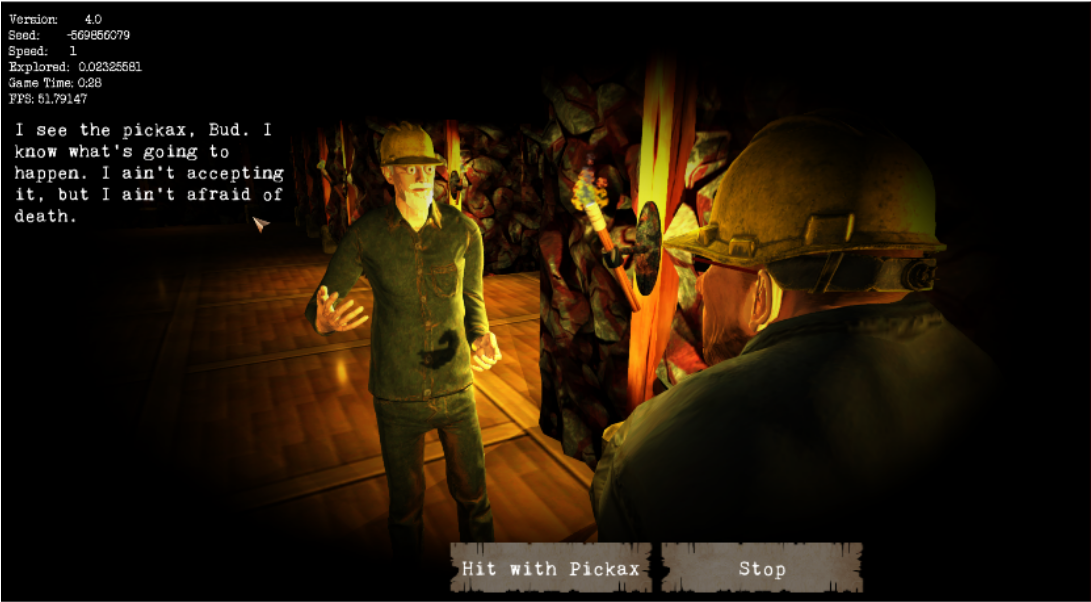
In Dwindle, NPC dialogue was not just narrative flavor. It directly affected whether the player could escape the mine with the workers.
At the same time, the project had limited writing, programming, and production bandwidth. I could not rely on large branching dialogue trees or fully bespoke NPC scripting without causing scope creep.
I needed a dialogue system that could:
Feel reactive and personal
Create meaningful player choice
Scale across many NPCs
Stay feasible for a small team to maintain
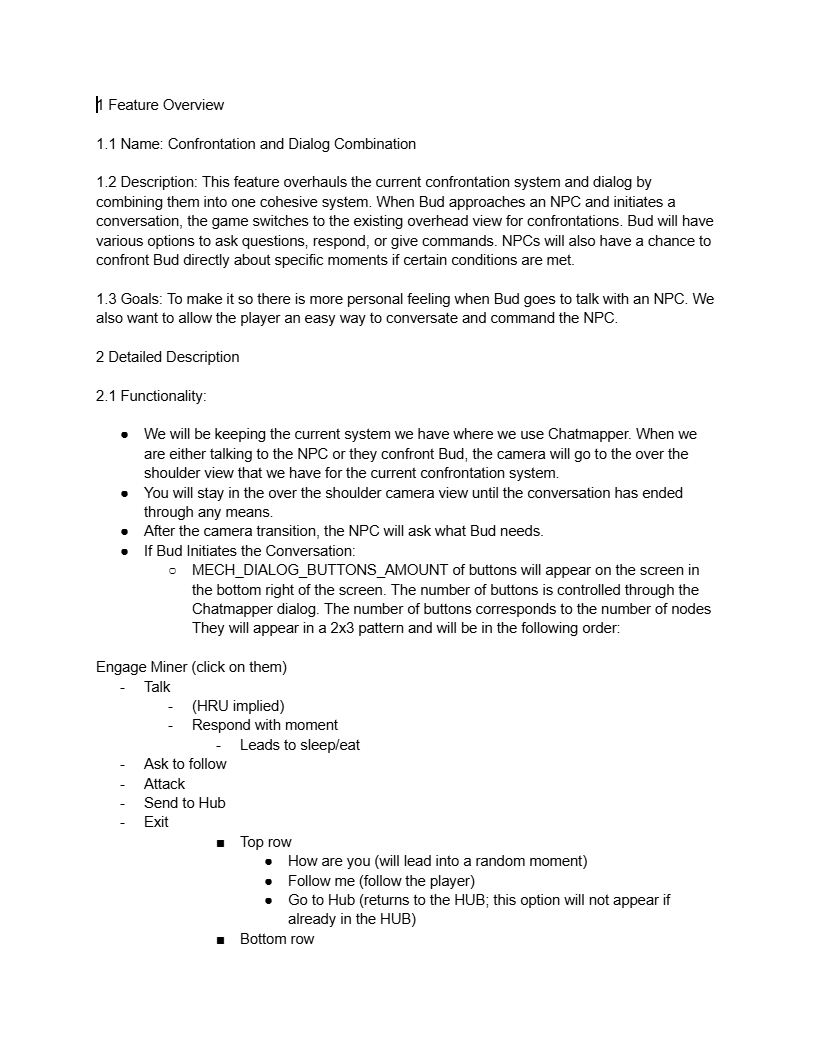
In Dwindle, the player is the foreman leading workers during an attempted escape.
NPCs track how they feel about the player.
That emotional state drives their behavior.
Positive dialogue builds trust and unlocks cooperation
Negative dialogue spreads rumors and undermines authority
Enough negative influence can trigger resistance or mutiny
This meant every dialogue choice had mechanical weight. Talking was not optional. It was a survival system.
Social Trust as a Core System
Constrain the Choice Space, Not the Player
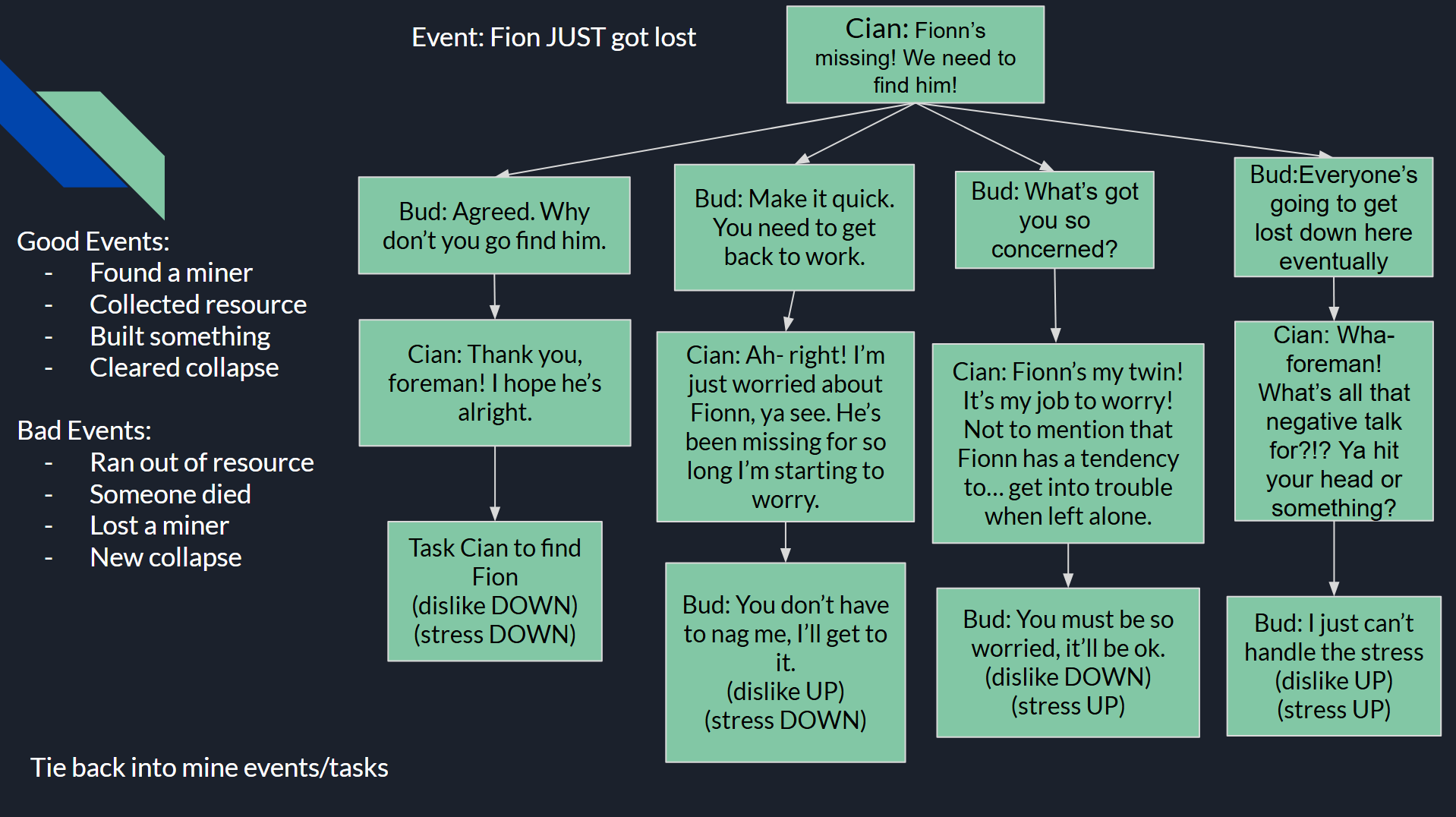
Instead of letting dialogue explode into dozens of branches, I designed a controlled four-option model for every NPC interaction:
One positive response
One negative response
Two neutral responses
This structure gave players meaningful agency while keeping the content and logic predictable for the team. Writers always knew how many lines to create. Programmers always knew how to process the outcome. Designers could tune consequences consistently across the game.
The “correct” dialogue choice was never random.
Players could deduce what to say by:
Listening to NPC conversations
Learning what each worker cared about
Paying attention to grievances, fears, and goals
The game never highlighted the correct option. Players succeeded by understanding people, not by being told what to click.
Listening Replaced Guessing
Balancing Clarity Without Hand-Holding
I ran multiple playtests to make sure the system struck the right balance.
Players needed enough information to make informed choices, but not so much that the answer became obvious. When players failed, it needed to feel like a consequence of ignoring people, not bad UI or missing data.
This tuning ensured that dialogue felt fair, readable, and rewarding.
The final system delivered:
Emotional investment in NPCs
High-stakes narrative choices
Scalable dialogue content
Clear mechanical consequences
Most importantly, it solved an early problem where players skipped dialogue. By tying conversations directly to survival, players became engaged, attentive, and emotionally connected to the cast.
Dialogue became a core gameplay loop, not just story delivery.
Narrative Depth Without Content Bloat
-
![An image of the hub.]()
A breakdown of the dialogue system I created, showcasing how the approval system reacts dynamically to the player’s choices. Each dialogue option influences character relationships, allowing the narrative to shift based on what the player says.
-
![An image of the foreman table.]()
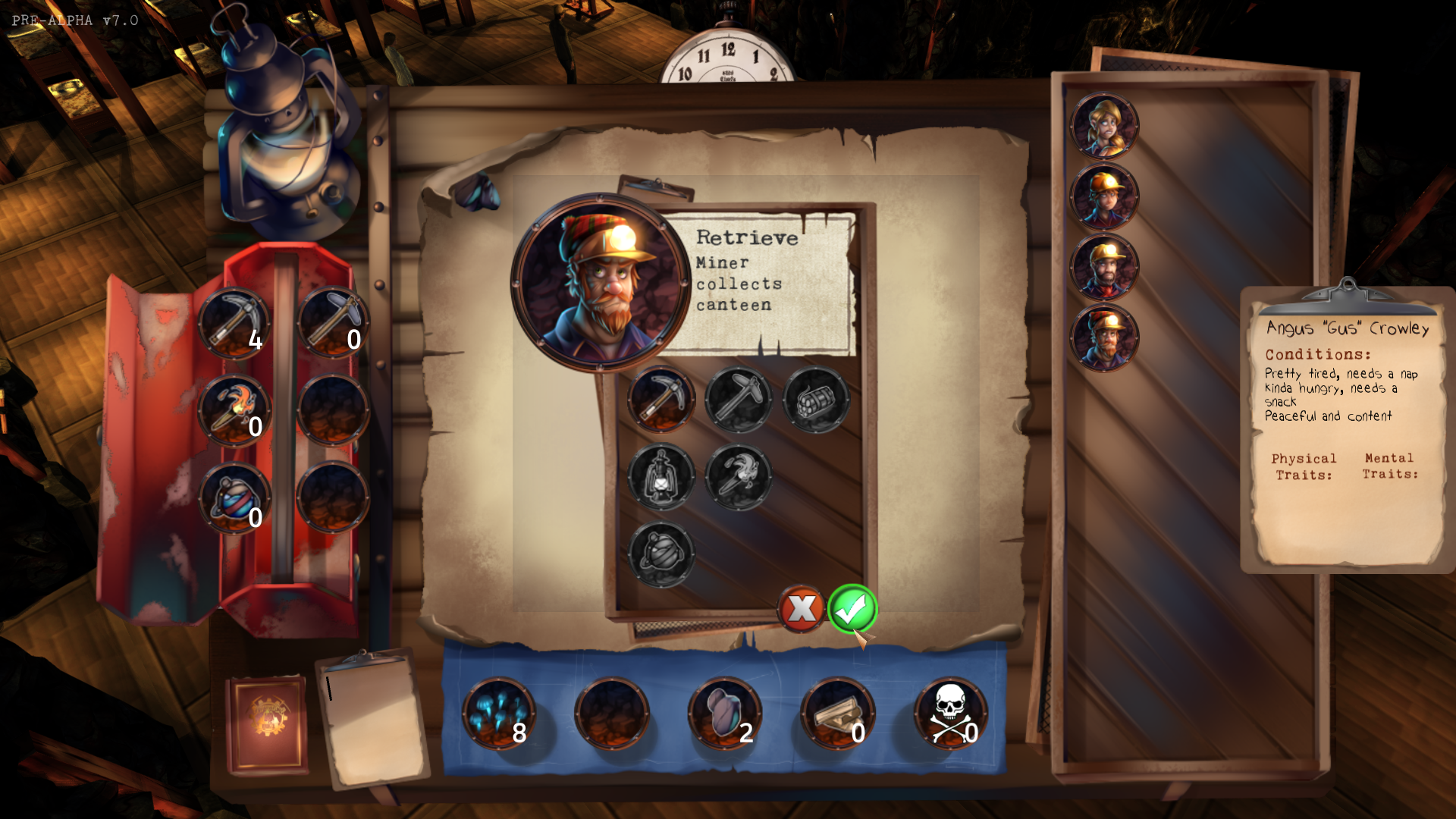
This image showcases the crafting interface from the game. I contributed to simplifying its layout, updating the iconography, and improving overall readability to create a smoother and more intuitive player experience.
-
![An image of the mines.]()
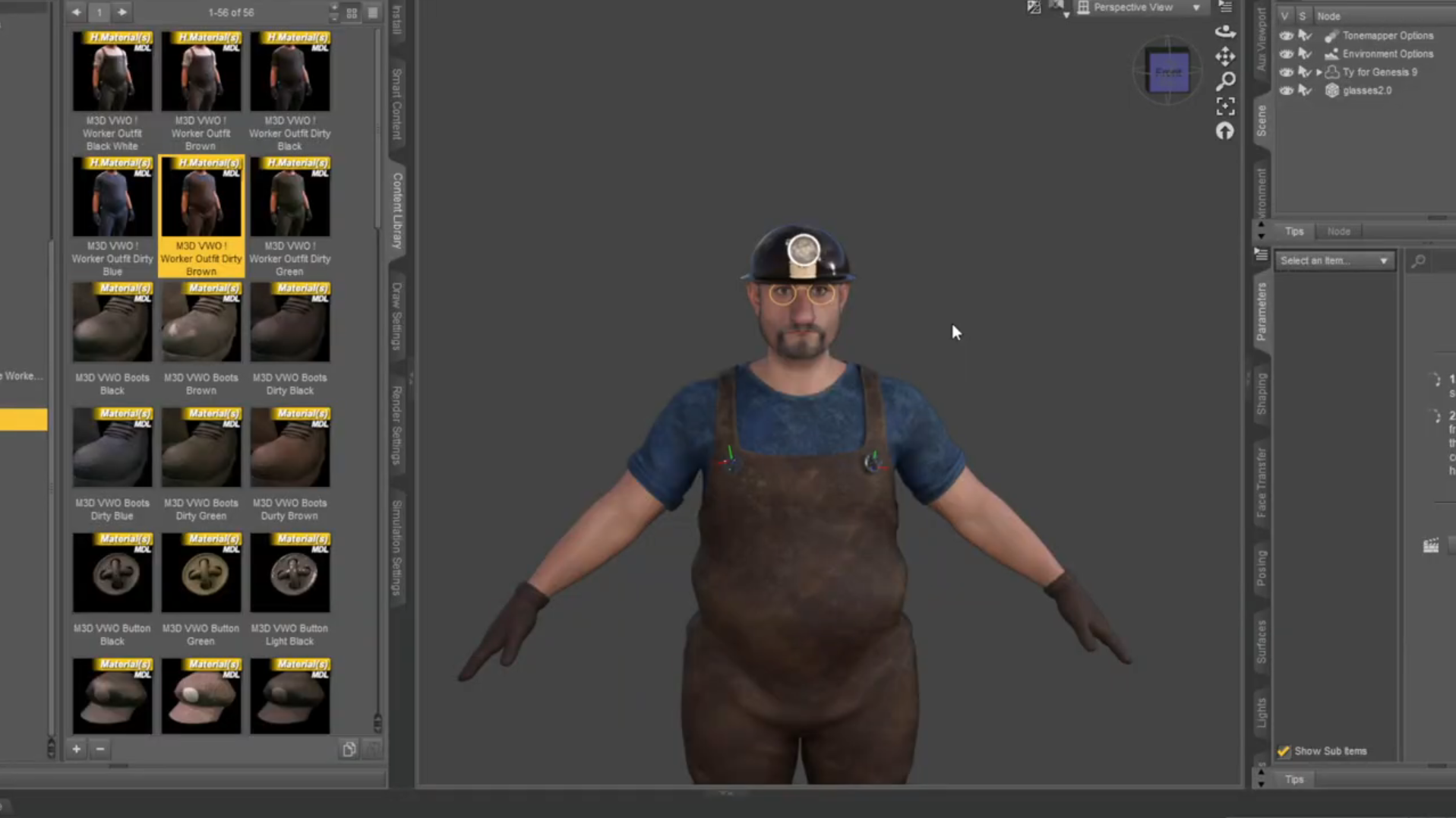
Creating a new character model in the Daz3D middleware. This process involved customizing the base mesh, refining proportions, and preparing the final model for integration into the game pipeline.