
Game Director | ByteHack

• Led a 14-person indie team from preproduction to Steam release.

• Designed the core hacking mechanic that rewrites enemies and the environment.

• Built puzzle systems, including level challenges, ability interactions, and moment-to-moment gameplay flow.

• Guided level design, enemy behavior, and overall player experience across disciplines.

• Created level blockouts, iterated on puzzles, and worked directly with designers and programmers.

• Ran live QA sessions to gather feedback, identify issues, and drive iteration.
Trophy System
01
Designing for Speed and Urgency
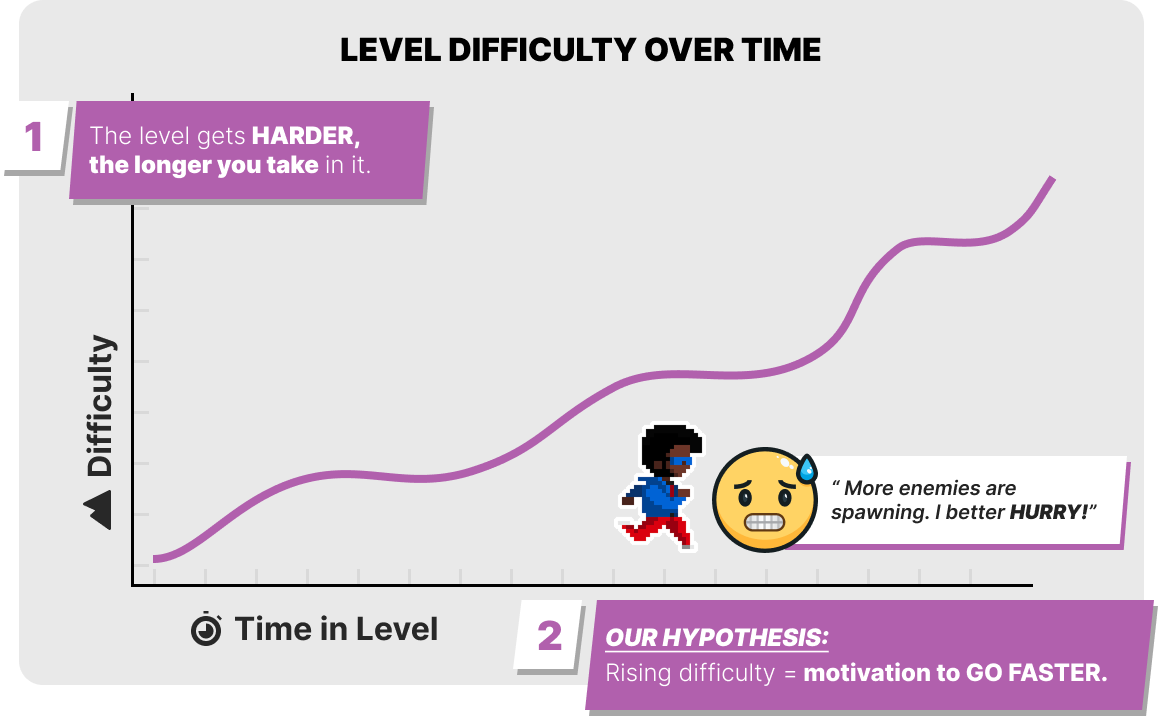
One of the key features of the game was that levels got harder as you progressed.

The main villain, named GPU, would begin to "hack" your computer, causing the game to become more difficult.

This was SUPPOSED TO drive players to want to finish levels as fast as possible and give them that dose of a competitive speedrun rush.
02
The Unexpected Player Response
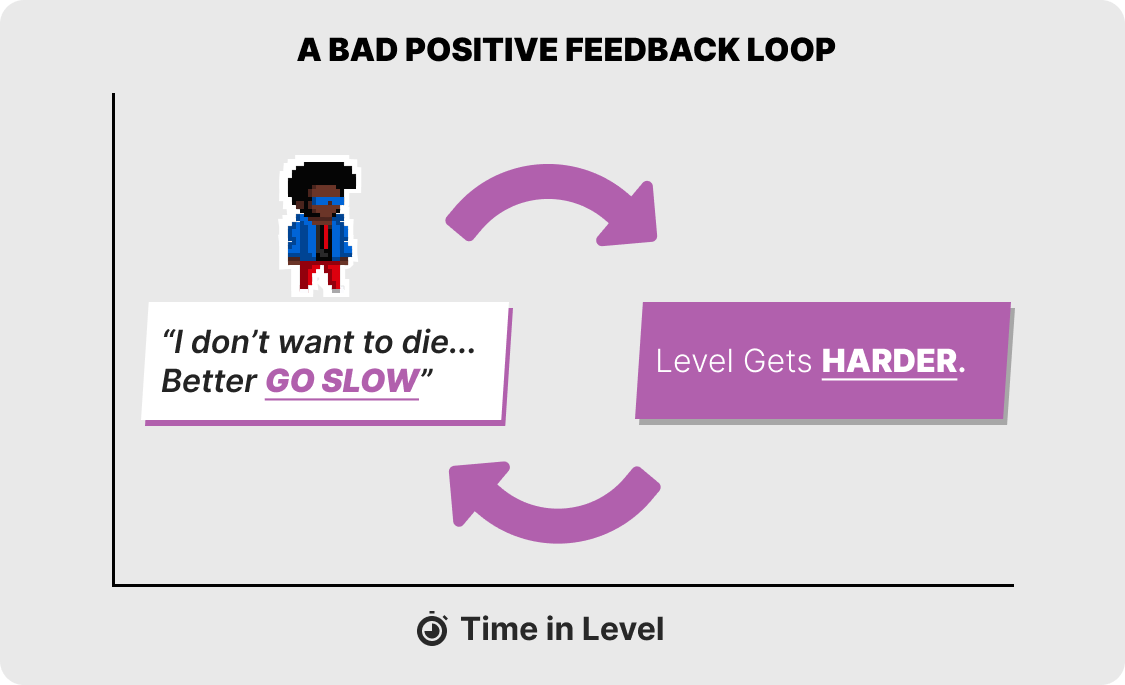
The PROBLEM WAS...

This had a bit of the opposite effect.

Players naturally played much more cautiously to avoid mistakes and death.

As they slowed down, the game became harder, causing them to play even more cautiously.
This ended up CREATING A NEGATIVE FEEDBACK LOOP.
03
Balancing the Stick with a Carrot
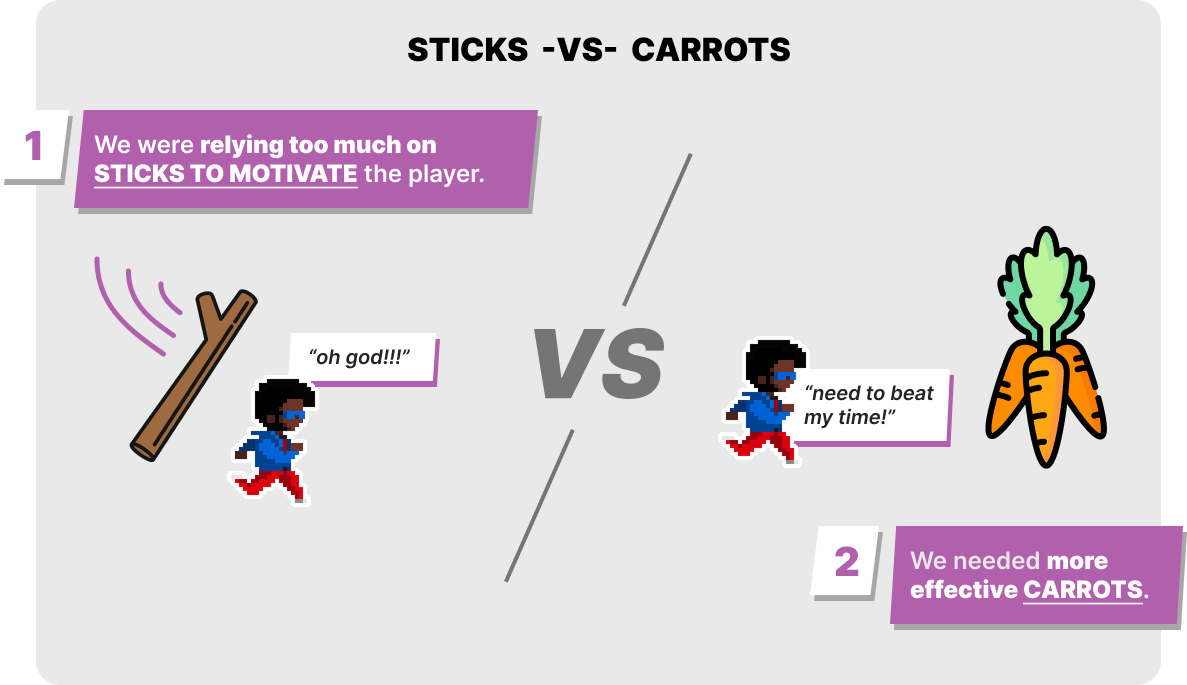
We realized it wasn't enough to provide a STICK to incentivize players to go faster.

We were already displaying players' times and notifying them when they set new records, but that wasn't enough.

We needed a better CARROT.
04
Creating Meaningful Rewards
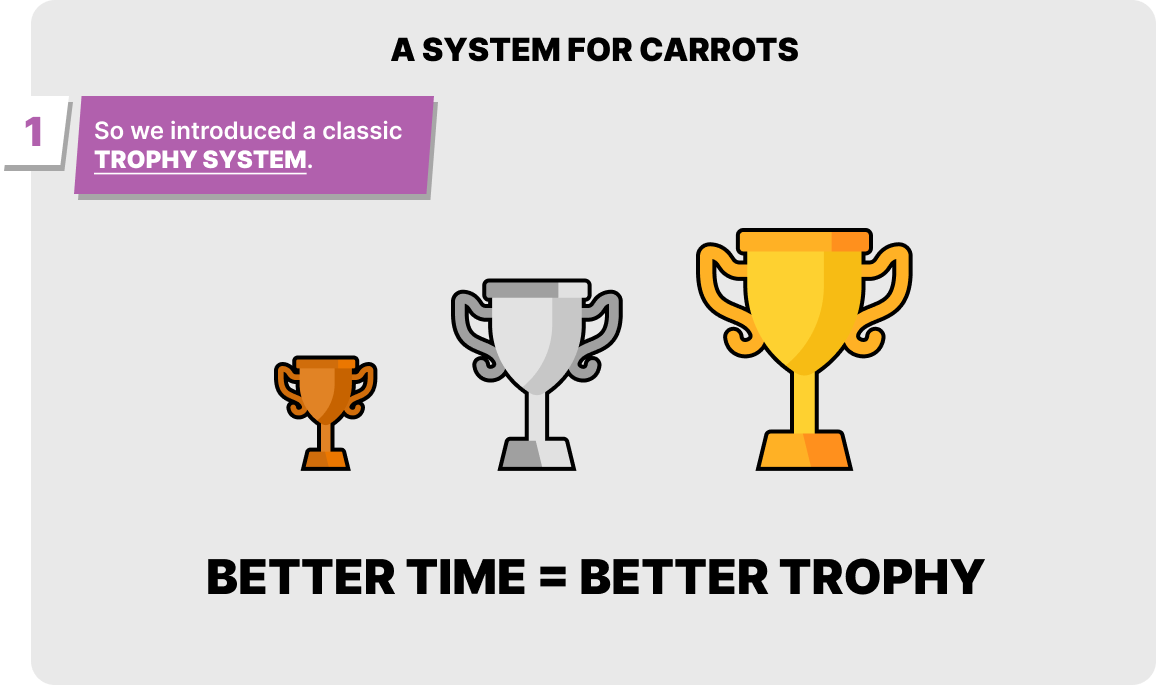
So we introduced a very classic trophy system with benchmarked achievements for different completion times:

Bronze > Silver > Gold

This gave players a clear reward to strive for and transformed speed from something they were merely encouraged to pursue into something they actively wanted to achieve.
05
A Step in the Right Direction
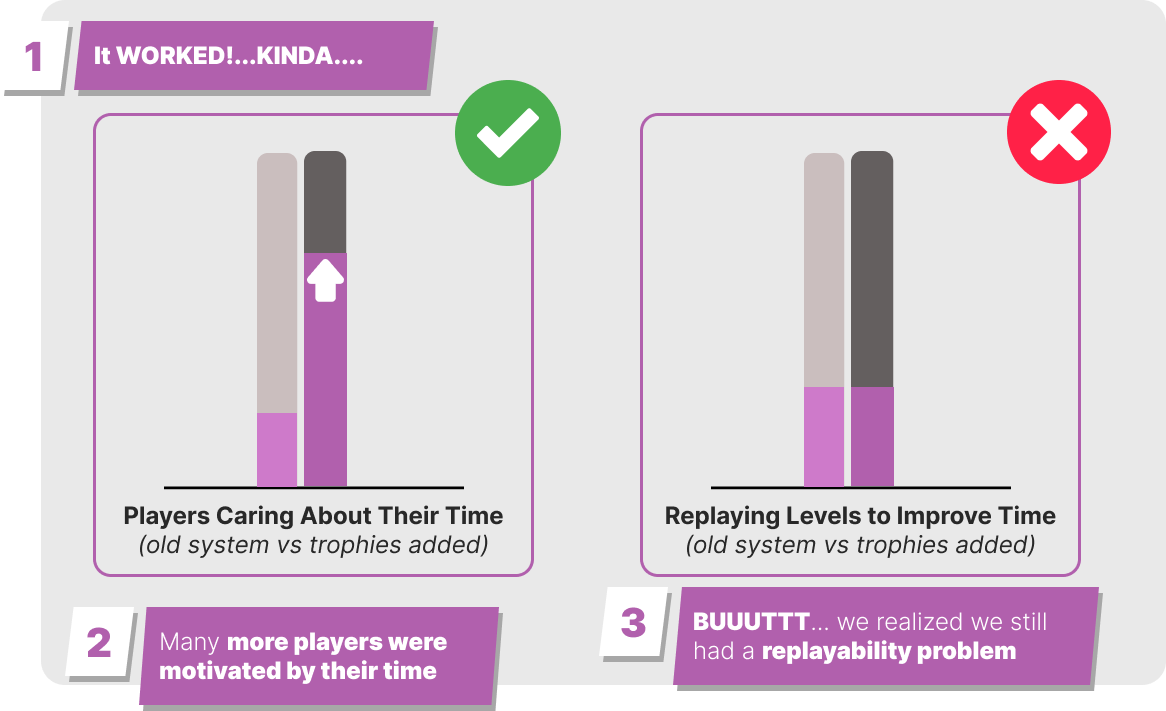
This definitely helped....

Players were more motivated and clearly understood the importance of moving faster.

However, this wasn't as big of a boost as we needed.
06
The Mastery Problem
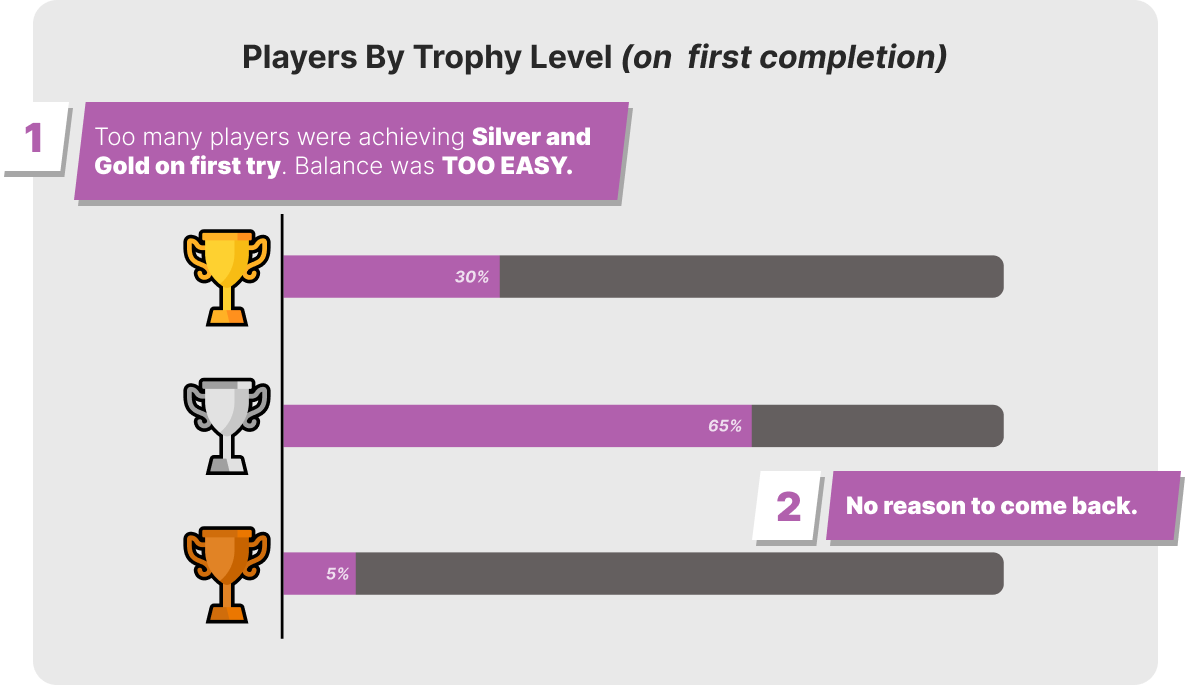
Most players were achieving Silver or Gold on their first runs, moving on, and feeling little reason or motivation to come back and "perfect" their score.

They felt they had already mastered the level.
07
Creating a Path to Mastery
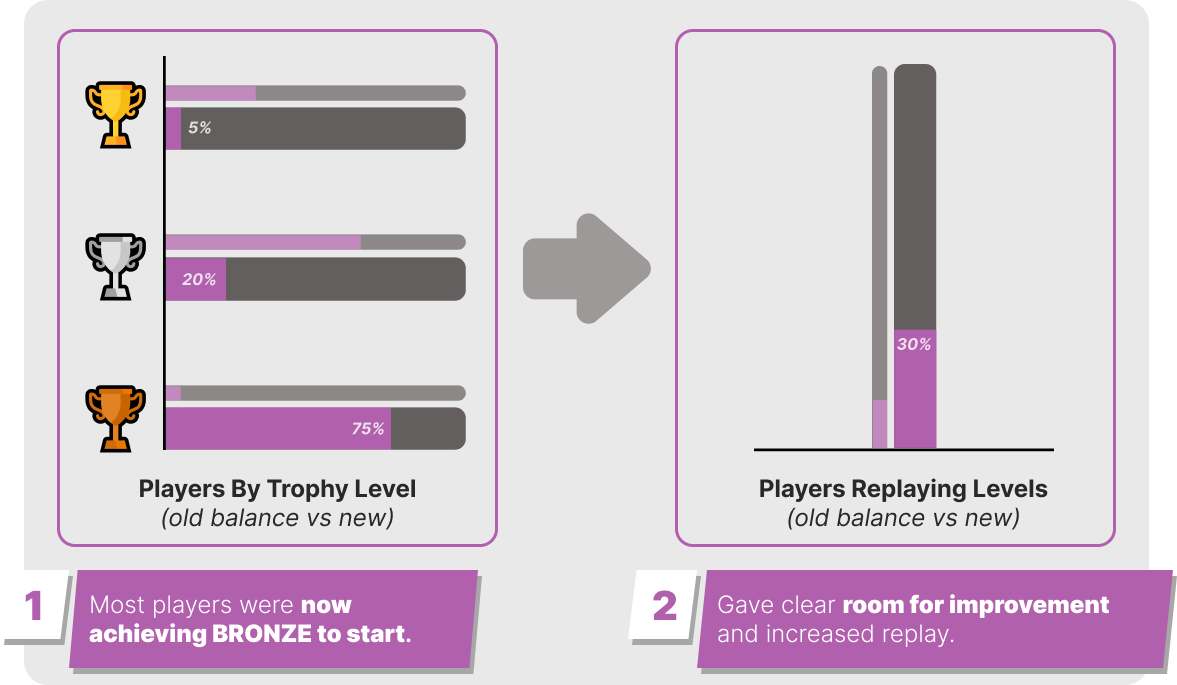
So we changed the balance and iterated through testing until most players were only achieving Bronze on their first runs.

This provided a clear pathway to mastery and motivated players by showing them they still had plenty of room to improve.

In the end, this increased the number of players who wanted to go back and replay levels to improve their scores.
08
The Skill Ceiling Problem
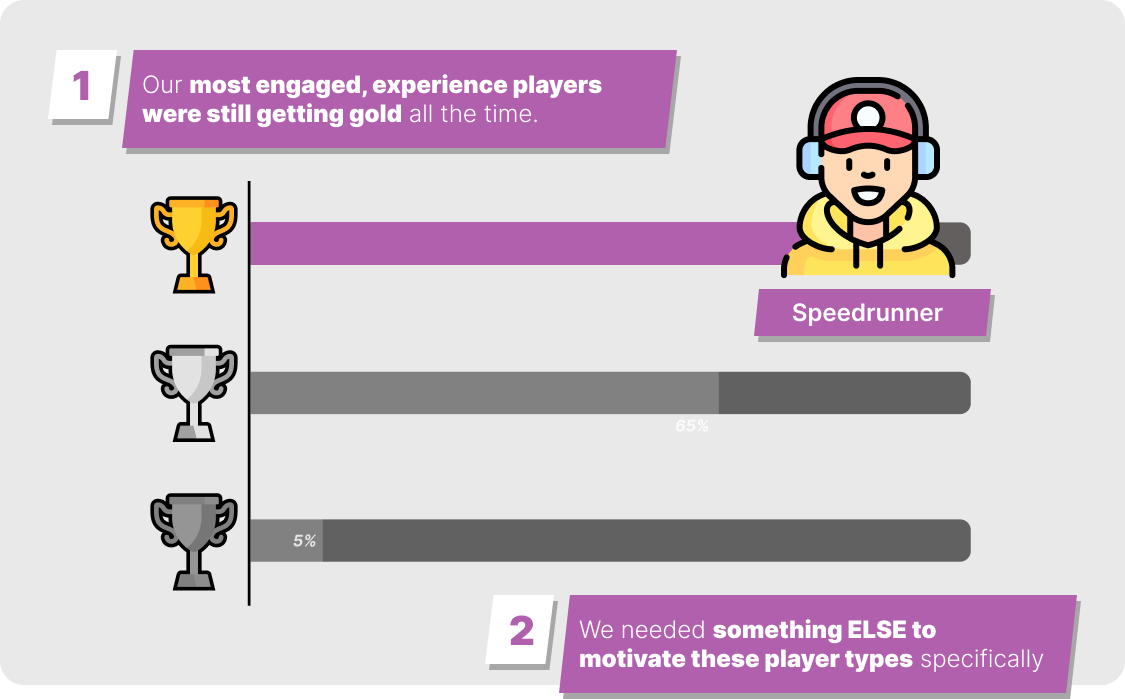
But while we had properly motivated MOST of our players, our most hardcore players, the speedrunner types already skilled in these kinds of games, were still getting Gold all the time.

They mastered the game too quickly...
09
A New Tier of Mastery
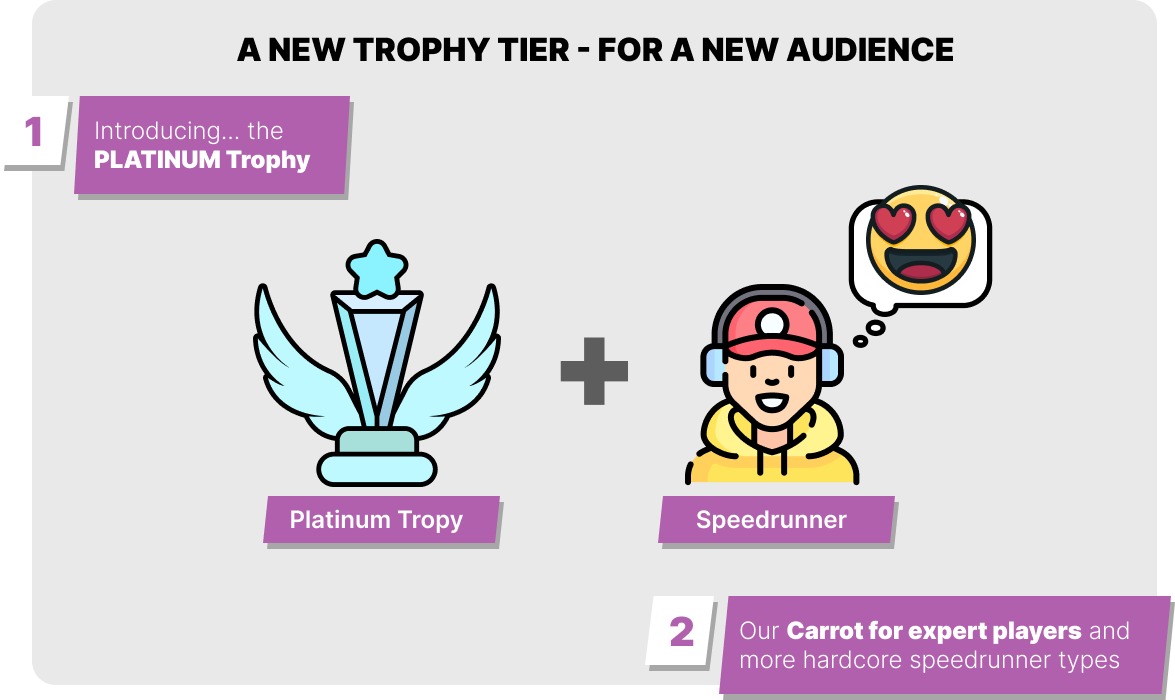
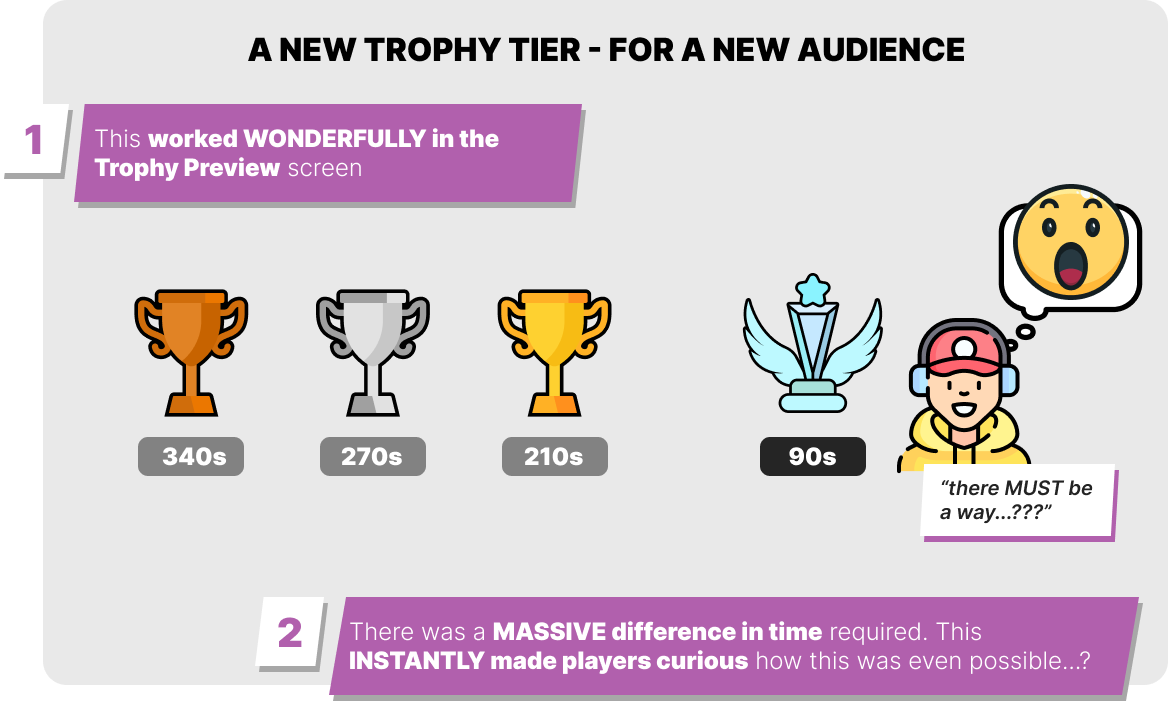
So we implemented a fourth tier of trophy aimed specifically at these players: the Platinum Trophy.

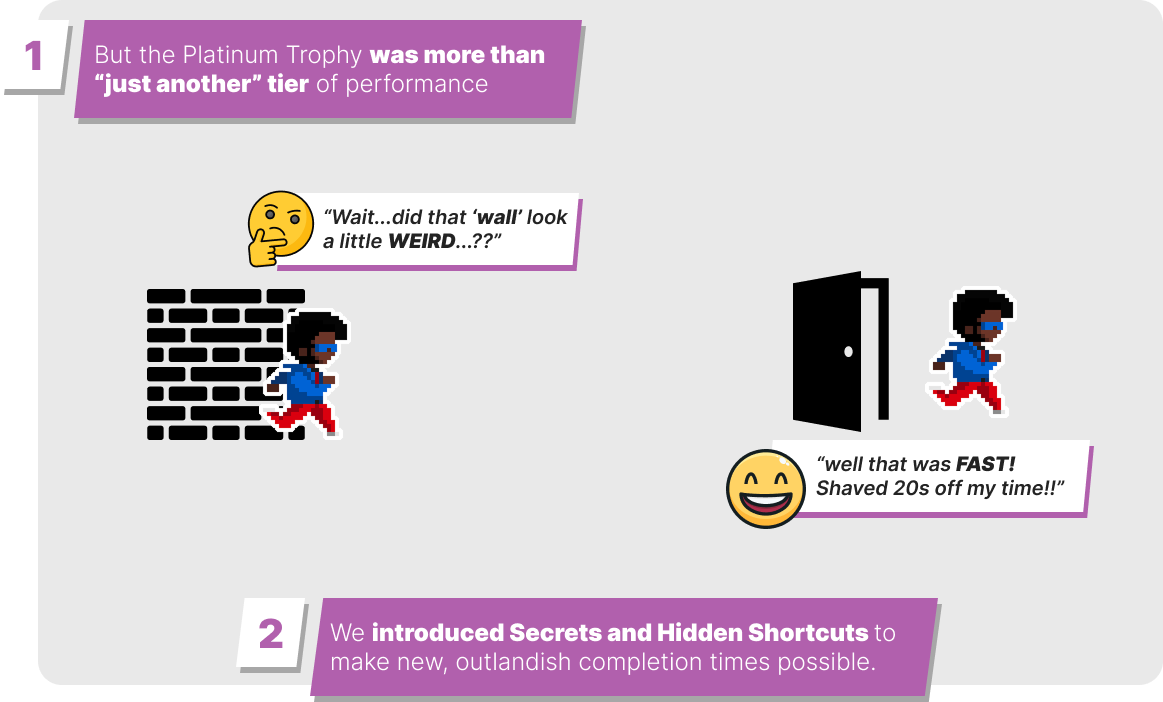
But the Platinum Trophy was not just "another level." It represented a drastic jump in performance requirements.

While Bronze, Silver, and Gold marked progression and mastery, Platinum was designed to challenge even our most skilled players.
10
Designing for Discovery
With this, we introduced secrets and shortcuts, two staples of the speedrunning genre and community.

These elements gave players new ways to improve beyond simply refining their execution.

Instead of shaving off a few seconds through practice alone, players could discover hidden routes, uncover advanced strategies, and rethink how they approached a level.

This transformed improvement from a purely mechanical challenge into one of exploration, experimentation, and mastery.
11
Turning Curiosity into Exploration
This worked wonders in the preview screen.

Players would see the massive jump in required time from Gold to Platinum and think, "HOW IS THAT EVEN POSSIBLE?"

That question alone became one of our most effective design tools.

Rather than explicitly telling players where these opportunities were, we let their curiosity lead them to the answer.